
30 Martha Street, Suite 303, Bolton, ON L7E 5V1

Proud ally and 2SLGBTQ+
Affirming care provider
Land Acknowledgement.
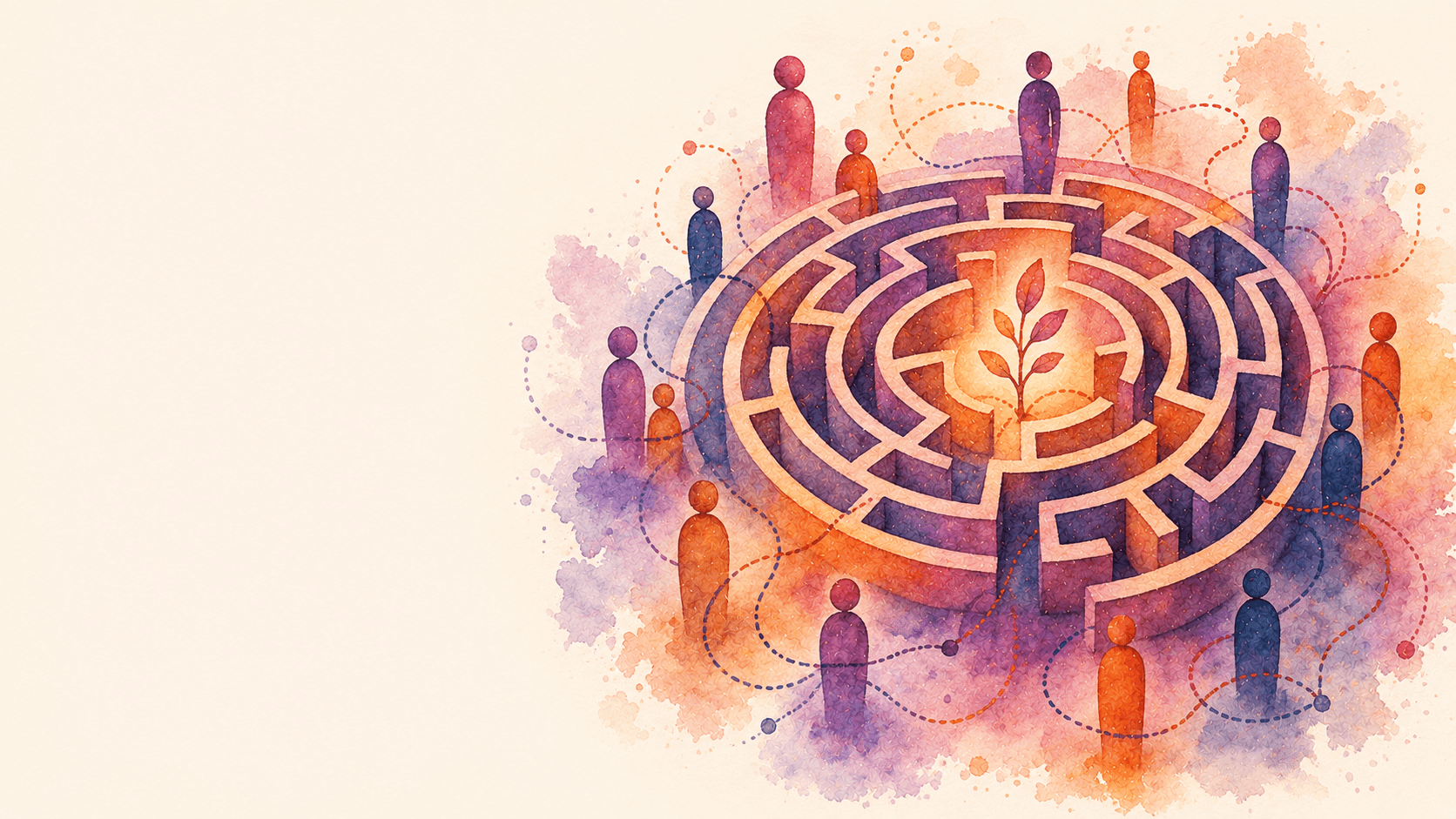
Life can feel like a labyrinth—an intricate web of pathways where every turn leads to new challenges and discoveries. At the heart of this labyrinth lies your family of origin, the foundation upon which your identity, beliefs, and emotional habits were built. Family systems theory helps us understand this labyrinth, revealing how the relationships, roles, and unspoken rules within families shape us in profound ways.
Families are not just groups of individuals living together; they are interconnected systems. Like a mobile, where moving one piece affects the entire structure, families are delicate, dynamic systems where every member’s actions ripple through the whole. Exploring this system, and your place within it, is key to unraveling the patterns that influence your life, relationships, and sense of self.
Family systems theory teaches that families operate as interconnected units, where the behavior of each member is influenced by and, in turn, influences the others. No one exists in isolation within a family system, and the dynamics between members are just as important as their individual characteristics.
For example, imagine a family where the father loses his job. This stress doesn’t stay confined to the father; it spreads throughout the family. The mother might feel anxious about finances, the children might sense the tension and act out, and the father’s withdrawal might deepen the cycle of stress. In such a system, the roles each family member plays—caretaker, peacemaker, or rebel—emerge as part of a feedback loop designed to maintain stability, even in dysfunctional ways.
This interdependence is why family therapists focus not just on individual symptoms but on the relational patterns within the entire system. Understanding these patterns can illuminate why certain behaviors emerge and, more importantly, how they can change.
Within a family, roles often define how each member relates to others. These roles can be explicit, such as “the responsible one” or “the troublemaker,” or more subtle, such as the “caretaker” who ensures everyone’s needs are met. Roles are not inherently good or bad—they help families function—but they can become restrictive if they are rigidly enforced or unconscious.
For instance, a child who grows up as “the peacemaker” may learn to avoid conflict at all costs, even when it means neglecting their own needs. Conversely, a child labeled as “the rebel” might feel compelled to act out, even when they don’t want to, because that role is how they’re seen within the family.
These roles often persist into adulthood. A woman who was the “caretaker” for her younger siblings might find herself taking on an over-functioning role in her friendships or romantic relationships, struggling to set boundaries. A man labeled as “the comedian” might use humor to deflect serious conversations, making it difficult for others to connect with him on a deeper level.
Recognizing these roles—and questioning whether they still serve you—is an essential step in breaking free from their limitations.
At the heart of a healthy family system is emotional safety. Children develop best when they feel secure—when they know their caregivers are reliable, responsive, and in control. This sense of safety allows children to explore their emotions freely, knowing they have a safe base to return to.
Emotional safety doesn’t mean eliminating conflict; disagreements are inevitable in any family. Instead, it means creating an environment where feelings can be expressed openly and handled with care. In families where emotional safety is absent—perhaps due to neglect, inconsistency, or chaos—children often develop coping mechanisms that persist into adulthood. For example:
These patterns, while protective in childhood, can become barriers to connection and growth in adulthood.
Every family operates according to certain unspoken rules or “myths.” These myths shape how members view themselves, each other, and the world. They might sound like:
These beliefs, often passed down through generations, can provide structure and identity but can also create pressure and limitation. For example, a family that values stoicism might unintentionally teach its members to suppress their emotions, making it difficult for them to form deep, intimate relationships. Similarly, a family that prioritizes achievement above all else might instill a fear of failure that stifles creativity and risk-taking.
Recognizing these myths—and how they influence your thoughts and behaviors—is a powerful step toward reclaiming your autonomy.
Boundaries are the invisible lines that define roles, responsibilities, and relationships within a family. They can be:
For example, in a family with diffuse boundaries, a parent might rely on a child for emotional support, effectively reversing their roles. In a family with rigid boundaries, members might struggle to connect, leaving issues unresolved. Clear boundaries strike the balance, fostering both independence and closeness.
Even as individuals grow and move outward into the world, the pull of their family system remains strong. Patterns learned in childhood often reappear in adult relationships, sometimes unconsciously. For instance:
Revisiting these patterns isn’t about blaming your family; it’s about understanding how your early experiences continue to shape you. This process—returning to the center of the labyrinth—is a chance to reflect, heal, and grow.
Sarah (name changed for privacy) grew up in a family where achievement was everything. Her parents, both high achievers, instilled in her the belief that success equated to worth. While this motivated Sarah to excel academically and professionally, it also left her feeling disconnected from her emotions and relationships.
Through therapy, Sarah began to examine the role her family’s myths and expectations had played in shaping her life. She recognized how her need to “perform” was rooted in her family system and how it prevented her from pursuing her true passions. By revisiting her family dynamics, Sarah was able to challenge these beliefs and create a life that aligned with her values.
Understanding your family system is like holding up a mirror to your life. It’s not always easy, but it’s a powerful tool for growth. Reflect on your own family with these questions:
The labyrinth of family influence is complex, but navigating it offers a chance for transformation. By examining the patterns, roles, and beliefs that shaped you, you can choose a new path—one rooted in awareness, authenticity, and connection.
Life can feel like a labyrinth—an intricate web of pathways where every turn leads to new challenges and discoveries. At the heart of this labyrinth lies your family of origin, the foundation upon which your identity, beliefs, and emotional habits were built. Family systems theory helps us understand this labyrinth, revealing how the relationships, roles, and unspoken rules within families shape us in profound ways.
Families are not just groups of individuals living together; they are interconnected systems. Like a mobile, where moving one piece affects the entire structure, families are delicate, dynamic systems where every member’s actions ripple through the whole. Exploring this system, and your place within it, is key to unraveling the patterns that influence your life, relationships, and sense of self.
Family systems theory teaches that families operate as interconnected units, where the behavior of each member is influenced by and, in turn, influences the others. No one exists in isolation within a family system, and the dynamics between members are just as important as their individual characteristics.
For example, imagine a family where the father loses his job. This stress doesn’t stay confined to the father; it spreads throughout the family. The mother might feel anxious about finances, the children might sense the tension and act out, and the father’s withdrawal might deepen the cycle of stress. In such a system, the roles each family member plays—caretaker, peacemaker, or rebel—emerge as part of a feedback loop designed to maintain stability, even in dysfunctional ways.
This interdependence is why family therapists focus not just on individual symptoms but on the relational patterns within the entire system. Understanding these patterns can illuminate why certain behaviors emerge and, more importantly, how they can change.
Within a family, roles often define how each member relates to others. These roles can be explicit, such as “the responsible one” or “the troublemaker,” or more subtle, such as the “caretaker” who ensures everyone’s needs are met. Roles are not inherently good or bad—they help families function—but they can become restrictive if they are rigidly enforced or unconscious.
For instance, a child who grows up as “the peacemaker” may learn to avoid conflict at all costs, even when it means neglecting their own needs. Conversely, a child labeled as “the rebel” might feel compelled to act out, even when they don’t want to, because that role is how they’re seen within the family.
These roles often persist into adulthood. A woman who was the “caretaker” for her younger siblings might find herself taking on an over-functioning role in her friendships or romantic relationships, struggling to set boundaries. A man labeled as “the comedian” might use humor to deflect serious conversations, making it difficult for others to connect with him on a deeper level.
Recognizing these roles—and questioning whether they still serve you—is an essential step in breaking free from their limitations.
At the heart of a healthy family system is emotional safety. Children develop best when they feel secure—when they know their caregivers are reliable, responsive, and in control. This sense of safety allows children to explore their emotions freely, knowing they have a safe base to return to.
Emotional safety doesn’t mean eliminating conflict; disagreements are inevitable in any family. Instead, it means creating an environment where feelings can be expressed openly and handled with care. In families where emotional safety is absent—perhaps due to neglect, inconsistency, or chaos—children often develop coping mechanisms that persist into adulthood. For example:
These patterns, while protective in childhood, can become barriers to connection and growth in adulthood.
Every family operates according to certain unspoken rules or “myths.” These myths shape how members view themselves, each other, and the world. They might sound like:
These beliefs, often passed down through generations, can provide structure and identity but can also create pressure and limitation. For example, a family that values stoicism might unintentionally teach its members to suppress their emotions, making it difficult for them to form deep, intimate relationships. Similarly, a family that prioritizes achievement above all else might instill a fear of failure that stifles creativity and risk-taking.
Recognizing these myths—and how they influence your thoughts and behaviors—is a powerful step toward reclaiming your autonomy.
Boundaries are the invisible lines that define roles, responsibilities, and relationships within a family. They can be:
For example, in a family with diffuse boundaries, a parent might rely on a child for emotional support, effectively reversing their roles. In a family with rigid boundaries, members might struggle to connect, leaving issues unresolved. Clear boundaries strike the balance, fostering both independence and closeness.
Even as individuals grow and move outward into the world, the pull of their family system remains strong. Patterns learned in childhood often reappear in adult relationships, sometimes unconsciously. For instance:
Revisiting these patterns isn’t about blaming your family; it’s about understanding how your early experiences continue to shape you. This process—returning to the center of the labyrinth—is a chance to reflect, heal, and grow.
Sarah (name changed for privacy) grew up in a family where achievement was everything. Her parents, both high achievers, instilled in her the belief that success equated to worth. While this motivated Sarah to excel academically and professionally, it also left her feeling disconnected from her emotions and relationships.
Through therapy, Sarah began to examine the role her family’s myths and expectations had played in shaping her life. She recognized how her need to “perform” was rooted in her family system and how it prevented her from pursuing her true passions. By revisiting her family dynamics, Sarah was able to challenge these beliefs and create a life that aligned with her values.
Understanding your family system is like holding up a mirror to your life. It’s not always easy, but it’s a powerful tool for growth. Reflect on your own family with these questions:
The labyrinth of family influence is complex, but navigating it offers a chance for transformation. By examining the patterns, roles, and beliefs that shaped you, you can choose a new path—one rooted in awareness, authenticity, and connection.



We’ll figure it out together.