
30 Martha Street, Suite 303, Bolton, ON L7E 5V1

Proud ally and 2SLGBTQ+
Affirming care provider
Land Acknowledgement.
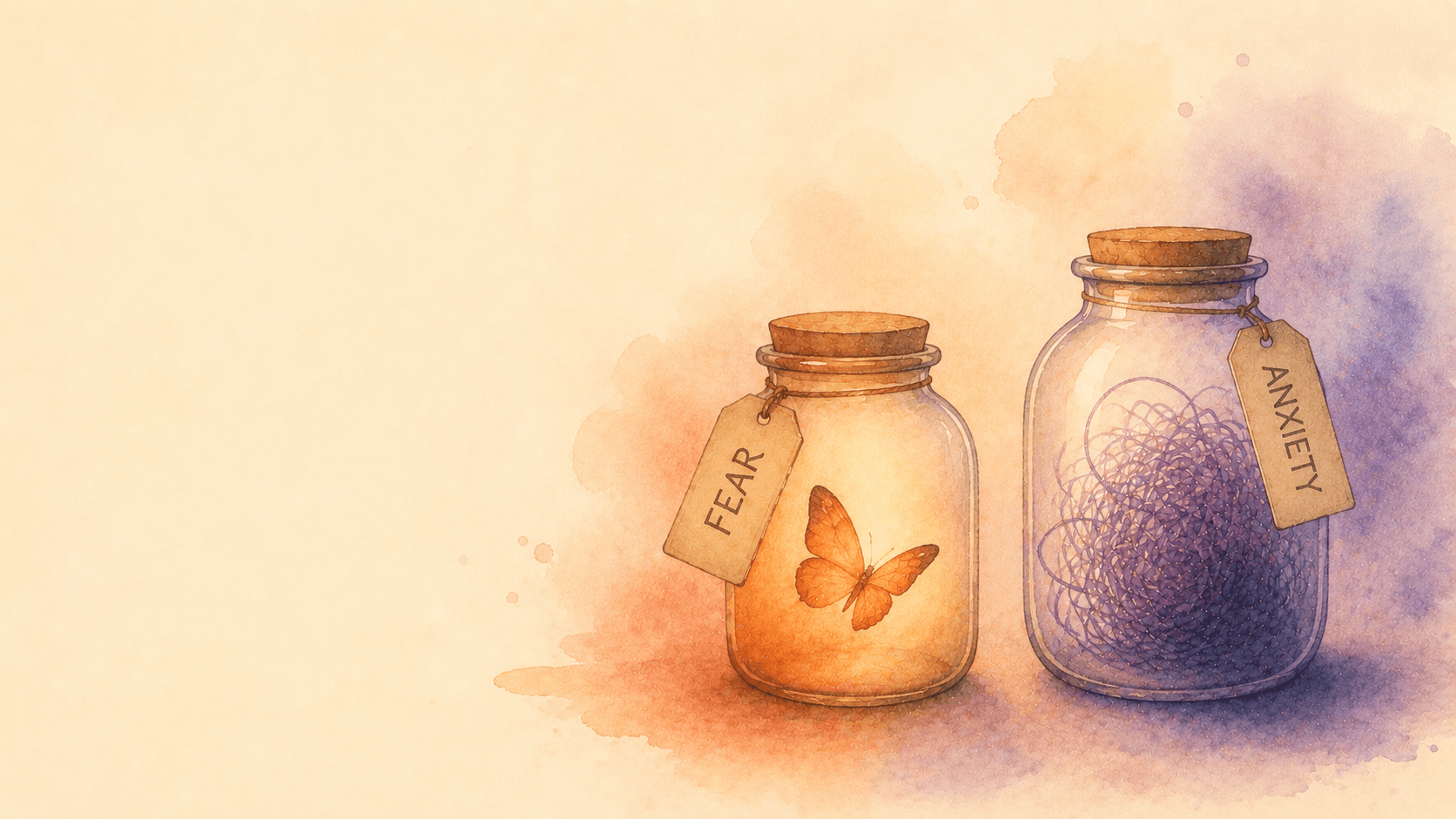
It’s easy to use the words “fear” and “anxiety” as if they mean the same thing, but they’re actually quite different. Fear is a natural and healthy response to danger—it kicks your body into action to keep you alive. Anxiety, on the other hand, is a more complex emotional experience that can either stop you from taking the actions you need or push you to act in ways that aren’t helpful.
Fear is one of your core emotions, designed by evolution to help you survive. It triggers the fight, flight, or freeze response when you face a real, external threat. For instance, if a dangerous animal suddenly charges toward you, your brain immediately signals your body to prepare for survival. This response is automatic and essential for your safety.
Anxiety is different. It’s what’s known as an “inhibitory emotion.” It can stop you from doing what you need to do, or it might lead you to act in counterproductive ways. Unlike fear, anxiety often comes from pushing down other core emotions—like sadness, anger, or fear—and replacing them with this secondary emotion.
What makes anxiety tricky is that it might be triggered by something happening right now or by unresolved past events that still affect you. Therapy can help uncover how these past experiences contribute to your present-day anxiety.
The level of anxiety you feel often links back to your early experiences with emotions. For example, imagine a child who learns that showing sadness causes a parent to withdraw or act impatiently. Over time, that child might suppress their sadness, which later shows up as anxiety instead.
Even though fear and anxiety can feel similar—both might make your heart race or cause you to sweat—there’s a key difference. Fear goes away once the danger is gone, but anxiety tends to linger and needs deeper exploration to resolve.
Core emotions like fear naturally settle down once you’ve fully felt them in your body and the threat has passed. For instance, by practicing deep belly breathing and staying curious about your feelings, you can let the physical sensations of fear—like trembling—flow through you until they fade away.
Anxiety, however, requires more than just calming down. To truly address it, you’ll need to uncover the core emotions hiding underneath. Here’s how you can start:
Take Steve, for example. He feels fear every time his boss assigns him a task. But when he looks closer, he realizes it’s actually anxiety. Why? Because completing a task isn’t life-threatening. Steve’s anxiety comes from painful childhood memories of being shamed for making mistakes, and his mind has linked tasks with those experiences.
To work through anxiety, dig deeper and ask yourself: “Do I feel sad? Angry? Afraid? Disgusted? Excited? Joyful? Or sexually excited?” Identifying these emotions can help you start processing them.
The good news is, you can work through both anxiety and fear to improve your emotional well-being. Practices like paying attention to your physical sensations, using guided imagery, or exploring your emotions mindfully can help. You don’t have to do it alone—therapists are here to guide you if you need support.
It’s also important to let go of judgment about your emotions. See them for what they are: signs that you’re human and alive.
Remember, your emotional health is just as important as your physical health. When fear or anxiety shows up, take a moment to understand what’s happening. With compassion and awareness, you can build a healthier, more resilient relationship with your emotions, and that will benefit you in both the short and long term.
It’s easy to use the words “fear” and “anxiety” as if they mean the same thing, but they’re actually quite different. Fear is a natural and healthy response to danger—it kicks your body into action to keep you alive. Anxiety, on the other hand, is a more complex emotional experience that can either stop you from taking the actions you need or push you to act in ways that aren’t helpful.
Fear is one of your core emotions, designed by evolution to help you survive. It triggers the fight, flight, or freeze response when you face a real, external threat. For instance, if a dangerous animal suddenly charges toward you, your brain immediately signals your body to prepare for survival. This response is automatic and essential for your safety.
Anxiety is different. It’s what’s known as an “inhibitory emotion.” It can stop you from doing what you need to do, or it might lead you to act in counterproductive ways. Unlike fear, anxiety often comes from pushing down other core emotions—like sadness, anger, or fear—and replacing them with this secondary emotion.
What makes anxiety tricky is that it might be triggered by something happening right now or by unresolved past events that still affect you. Therapy can help uncover how these past experiences contribute to your present-day anxiety.
The level of anxiety you feel often links back to your early experiences with emotions. For example, imagine a child who learns that showing sadness causes a parent to withdraw or act impatiently. Over time, that child might suppress their sadness, which later shows up as anxiety instead.
Even though fear and anxiety can feel similar—both might make your heart race or cause you to sweat—there’s a key difference. Fear goes away once the danger is gone, but anxiety tends to linger and needs deeper exploration to resolve.
Core emotions like fear naturally settle down once you’ve fully felt them in your body and the threat has passed. For instance, by practicing deep belly breathing and staying curious about your feelings, you can let the physical sensations of fear—like trembling—flow through you until they fade away.
Anxiety, however, requires more than just calming down. To truly address it, you’ll need to uncover the core emotions hiding underneath. Here’s how you can start:
Take Steve, for example. He feels fear every time his boss assigns him a task. But when he looks closer, he realizes it’s actually anxiety. Why? Because completing a task isn’t life-threatening. Steve’s anxiety comes from painful childhood memories of being shamed for making mistakes, and his mind has linked tasks with those experiences.
To work through anxiety, dig deeper and ask yourself: “Do I feel sad? Angry? Afraid? Disgusted? Excited? Joyful? Or sexually excited?” Identifying these emotions can help you start processing them.
The good news is, you can work through both anxiety and fear to improve your emotional well-being. Practices like paying attention to your physical sensations, using guided imagery, or exploring your emotions mindfully can help. You don’t have to do it alone—therapists are here to guide you if you need support.
It’s also important to let go of judgment about your emotions. See them for what they are: signs that you’re human and alive.
Remember, your emotional health is just as important as your physical health. When fear or anxiety shows up, take a moment to understand what’s happening. With compassion and awareness, you can build a healthier, more resilient relationship with your emotions, and that will benefit you in both the short and long term.



We’ll figure it out together.