Locations
Bolton: 30 Martha Street, Suite 303, Bolton, ON L7E 5V1

Proud ally and LGBTQ2s+
Affirming care provider
Land Acknowledgement.
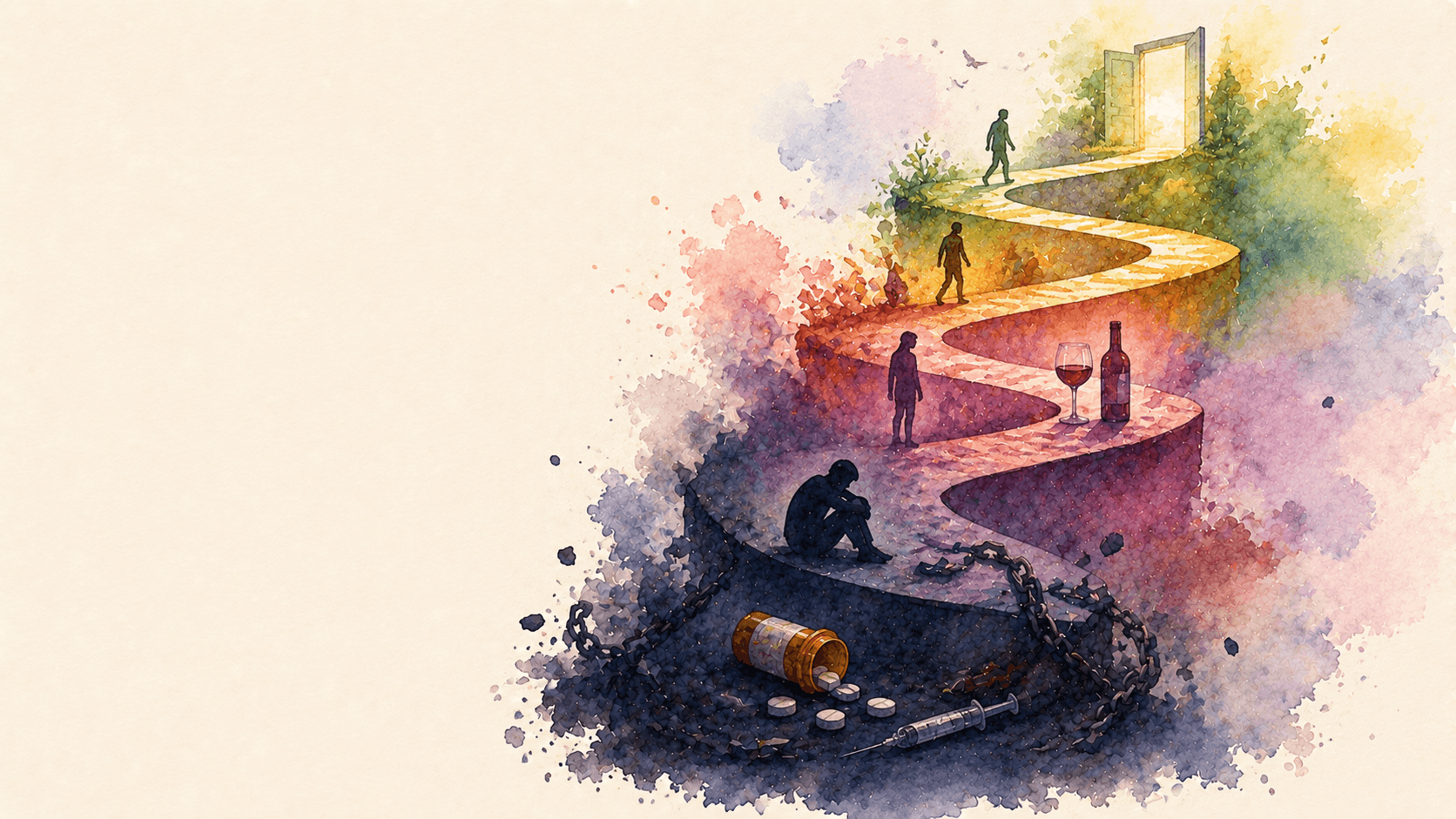
Addiction is not something that happens overnight. It’s a slow, progressive process, shaped by a complex interplay of biology, psychology, trauma, environment, and often, chance. What may start as innocent experimentation can spiral into dependence—and eventually, full-blown addiction that feels nearly impossible to escape.
But here's the truth: addiction is not a moral failure. It's a health condition. And like all health conditions, it can be treated, understood, and healed from. In this guide, we’ll walk through the seven recognized stages of addiction—exploring the signs, the science, and the moments of intervention that offer a path to hope.
Every journey starts somewhere. For addiction, that moment is usually a single use: a drink at a party, a prescription after surgery, or a joint passed among friends.
At this stage, use is not habitual. But seeds are planted—particularly if the experience is associated with relief, pleasure, or social bonding.
Example: A teen tries cannabis after school. They feel calm for the first time in weeks. That “relief” imprints as something worth repeating.
Video: How Addiction Happens | Addiction Policy Forum
Experimentation marks the beginning of a pattern. Individuals start to use substances in specific situations: to relax, to socialize, to sleep, or to escape stress.
At this point, substance use feels voluntary. But the brain is already beginning to form associations—linking that substance to relief, reward, or routine.
The Risk: Many people believe they’re in control. This false sense of control often delays help-seeking behaviours.
Ref: SAMHSA, 2022
Video: Understanding Substance Use & The Brain | NIDA
In this stage, casual use becomes consistent. The individual may use daily, weekly, or at predictable times (e.g., every Friday night or before stressful events).
The person may still think they’re “fine,” especially if they are functioning at work or school. But small cracks start to show: tardiness, memory lapses, irritability, or reduced performance.
Example: A retail worker begins smoking cannabis every evening to deal with job stress. Eventually, they stop going out, citing fatigue—but really, they just want to stay home and use.
Ref: Canadian Centre on Substance Use and Addiction
Video: The Psychology of Addiction | SciShow Psych
Risky use is where the red flags become harder to ignore. Despite mounting consequences—emotionally, financially, physically—the person continues using.
Example: A young adult uses cocaine to meet deadlines. They perform well at first, but start showing up late, missing calls, and isolating. They tell themselves, “Once the project is done, I’ll stop.” But that day never comes.
At this stage, denial is common. The person may blame stress, others, or external pressures—but not the substance.
Video: What Is Risky Use? | AddictionCenter
Ref: CDC Behavioral Risk Factor Surveillance System
Dependence occurs when the brain and body adapt to the substance’s presence. Two forms emerge:
Example: An office worker starts drinking in the morning—not to enjoy it, but to stop the shakes.
Video: What Is Physical Dependence? | NIAAA
Ref: National Institute on Drug Abuse
Addiction is marked by a psychological and physiological grip on behaviour. The substance becomes the central focus of life, and priorities shift drastically.
What Science Shows: Addiction alters brain structure—especially the reward circuit—making it harder for people to experience pleasure from normal life activities. It’s not about willpower; it’s a brain disease (NIDA, 2022).
Example: A musician stops showing up for gigs and begins pawning instruments to buy opioids. Friends and family express concern, but they insist they’re “handling it.”
Video: How Addiction Hijacks the Brain | Big Think
This stage represents the bottom—or the breakthrough. It often comes after a severe event: an overdose, arrest, intervention, or personal realization.
Recovery is possible at any stage—but it often begins with crisis. That doesn’t mean someone has to “hit rock bottom” to get help. But for many, the pain becomes too great to ignore.
Support Options Include:
Video: How to Help Someone With Addiction | MedCircle
Addiction thrives in secrecy—but healing thrives in connection. Recovery isn’t about being “perfect.” It’s about learning new tools, building support, and giving yourself a second chance (or third, or tenth).
“Addiction is giving up everything for one thing. Recovery is giving up one thing for everything.”
Video: What Does Recovery Look Like? | Recovery Research Institute
References:
Addiction is not something that happens overnight. It’s a slow, progressive process, shaped by a complex interplay of biology, psychology, trauma, environment, and often, chance. What may start as innocent experimentation can spiral into dependence—and eventually, full-blown addiction that feels nearly impossible to escape.
But here's the truth: addiction is not a moral failure. It's a health condition. And like all health conditions, it can be treated, understood, and healed from. In this guide, we’ll walk through the seven recognized stages of addiction—exploring the signs, the science, and the moments of intervention that offer a path to hope.
Every journey starts somewhere. For addiction, that moment is usually a single use: a drink at a party, a prescription after surgery, or a joint passed among friends.
At this stage, use is not habitual. But seeds are planted—particularly if the experience is associated with relief, pleasure, or social bonding.
Example: A teen tries cannabis after school. They feel calm for the first time in weeks. That “relief” imprints as something worth repeating.
Video: How Addiction Happens | Addiction Policy Forum
Experimentation marks the beginning of a pattern. Individuals start to use substances in specific situations: to relax, to socialize, to sleep, or to escape stress.
At this point, substance use feels voluntary. But the brain is already beginning to form associations—linking that substance to relief, reward, or routine.
The Risk: Many people believe they’re in control. This false sense of control often delays help-seeking behaviours.
Ref: SAMHSA, 2022
Video: Understanding Substance Use & The Brain | NIDA
In this stage, casual use becomes consistent. The individual may use daily, weekly, or at predictable times (e.g., every Friday night or before stressful events).
The person may still think they’re “fine,” especially if they are functioning at work or school. But small cracks start to show: tardiness, memory lapses, irritability, or reduced performance.
Example: A retail worker begins smoking cannabis every evening to deal with job stress. Eventually, they stop going out, citing fatigue—but really, they just want to stay home and use.
Ref: Canadian Centre on Substance Use and Addiction
Video: The Psychology of Addiction | SciShow Psych
Risky use is where the red flags become harder to ignore. Despite mounting consequences—emotionally, financially, physically—the person continues using.
Example: A young adult uses cocaine to meet deadlines. They perform well at first, but start showing up late, missing calls, and isolating. They tell themselves, “Once the project is done, I’ll stop.” But that day never comes.
At this stage, denial is common. The person may blame stress, others, or external pressures—but not the substance.
Video: What Is Risky Use? | AddictionCenter
Ref: CDC Behavioral Risk Factor Surveillance System
Dependence occurs when the brain and body adapt to the substance’s presence. Two forms emerge:
Example: An office worker starts drinking in the morning—not to enjoy it, but to stop the shakes.
Video: What Is Physical Dependence? | NIAAA
Ref: National Institute on Drug Abuse
Addiction is marked by a psychological and physiological grip on behaviour. The substance becomes the central focus of life, and priorities shift drastically.
What Science Shows: Addiction alters brain structure—especially the reward circuit—making it harder for people to experience pleasure from normal life activities. It’s not about willpower; it’s a brain disease (NIDA, 2022).
Example: A musician stops showing up for gigs and begins pawning instruments to buy opioids. Friends and family express concern, but they insist they’re “handling it.”
Video: How Addiction Hijacks the Brain | Big Think
This stage represents the bottom—or the breakthrough. It often comes after a severe event: an overdose, arrest, intervention, or personal realization.
Recovery is possible at any stage—but it often begins with crisis. That doesn’t mean someone has to “hit rock bottom” to get help. But for many, the pain becomes too great to ignore.
Support Options Include:
Video: How to Help Someone With Addiction | MedCircle
Addiction thrives in secrecy—but healing thrives in connection. Recovery isn’t about being “perfect.” It’s about learning new tools, building support, and giving yourself a second chance (or third, or tenth).
“Addiction is giving up everything for one thing. Recovery is giving up one thing for everything.”
Video: What Does Recovery Look Like? | Recovery Research Institute
References:

We’ll figure it out together.